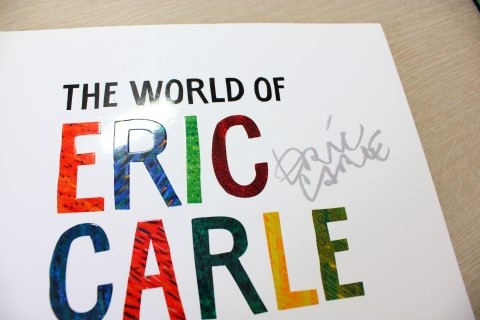
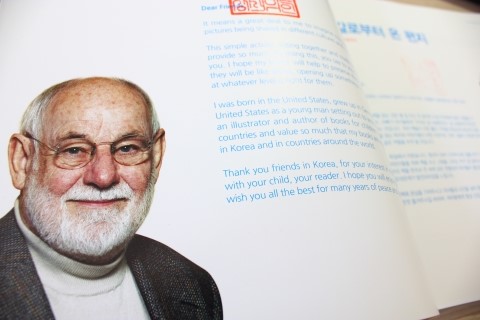
I recently came across THE WORLD OF ERIC CARLE, a collection of work by the illustrator and children's book author Eric Carle.
Eric Carle was born in New York in 1929 and moved to Germany at age six, where he later graduated from the prestigious Akademie der bildenden Künste. But he never forgot the happy childhood he'd had in New York, and eventually he went back with nothing but a portfolio and forty dollars in his pocket. He soon landed a job as a graphic designer in the promotions department at The New York Times, and later worked there as an art director.
One day, the writer and educator Bill Martin Jr. asked him to illustrate a story, and the two of them made Brown Bear, Brown Bear, What Do You See? together. After that, Carle began writing and illustrating children's books entirely on his own, and that's when he started becoming known around the world.
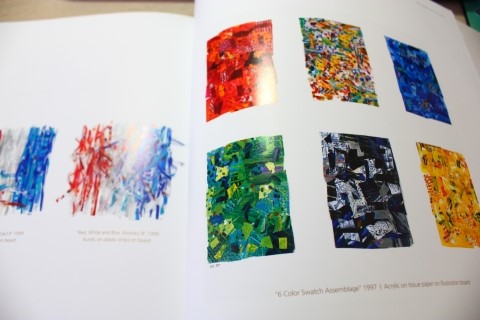
What's distinctive about his work is that he paints tissue paper by hand and then uses those painted sheets as raw material for collage. A new technique and format like that is bound to draw attention. But before we even get to the technique, I'd say the real reason his work is so loved is the love and insight he has for children.
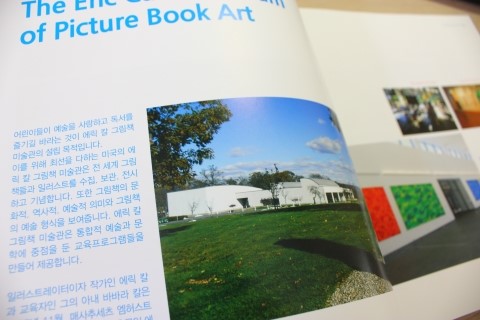
But the most wonderful thing he did, I think, is founding The Eric Carle Museum of Picture Book Art. It collects and exhibits picture books and illustrations from around the world, and also runs educational programs centered on art and literature. Footprints like that, ones that keep having a positive impact, look truly admirable to me.
Korea's enthusiasm for education is second to none anywhere in the world. But it's also true that we've long struggled with problems in public education, an overflow of private tutoring, the college entrance exam, and a system that still ranks and sorts kids rather than truly evaluating them. There are plenty of unresolved issues here. Someone might argue that this very system is what built the Korea we have today, but I'm not so sure.
A bit of a tangent, but I personally believe children should receive some basic design education. Living as we do in an enormous consumer society, we owe it to our kids to teach them that every act of consumption is eventually followed by disposal. At the same time, we should show them that design, as a process, has the potential to balance production, consumption, and disposal in harmony. If kids grow up learning to think this way through their own hands-on experience, wouldn't the world end up a little more balanced and harmonious?
In any case, Carle's museum has also hosted first exhibitions for artists like William Steig, Beatrix Potter, and Maurice Sendak. Eric Carle has since retired, but the traces he left behind are still very much alive in culture, art, and education. This book left me thinking about what we, too, might do to make the world a little more beautiful before we're gone.
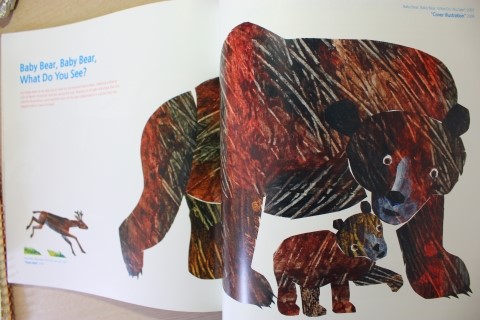
Brown Bear, Brown Bear, What Do You See?
Writing this post reminded me of Ralph Waldo Emerson's "What Is Success," so I'll leave it here. :-)
To laugh often and much.
To win the respect of the wise
and the love of children.
To earn the appreciation of honest critics,
and endure the betrayal of false friends.
To appreciate beauty,
to find the best in others.
Whether by raising a healthy child,
tending a small patch of garden,
or improving some social condition,
to leave the world just a little better
than you found it when you arrived,
and then to go.
To know that because you once lived here,
even a single other life
breathed a little easier.
This is to have succeeded.
The World of Eric Carle
Play: direct preview isn't supported for this file.
Click to play it in a popup window.