A while back, the drama I Hear Your Voice wrapped up its run to great popularity. As the episodes went on, interest grew not just in the drama itself
but in the actors as well. Lee Jong-suk, who played the charming male lead Su-ha, in particular
became hugely popular. The show has already ended, but my mother, who never missed a live broadcast, still hasn't quite let go of it,
and she keeps telling me things like: our son is handsome enough already, but it'd be even better if he grew up to be as
cool as Lee Jong-suk.
Having watched a few episodes myself, I won't deny Su-ha's charm, but I seriously doubt that
copying his mannerisms or mindset would make that same charisma sprout in me like new skin.
That got me thinking about what it really means to take on a new form. Everything that exists in this world
carries a history from the moment it's born, and shapes its own identity as time passes.
So when you try to dress something in a new form, its identity has to remain intact at the center, or you can't hold onto both naturalness
and newness at the same time, I think. And that seems to be exactly the direction Kenmei Nagaoka takes
in the book Walking Together as a Designer.
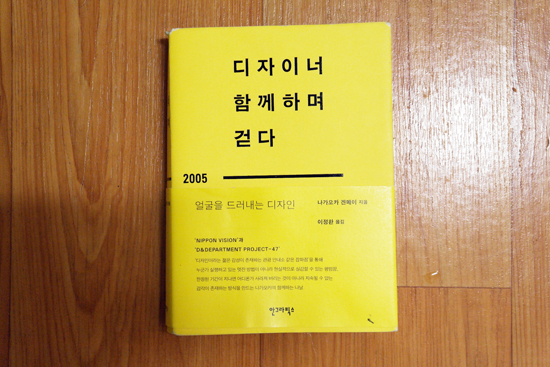
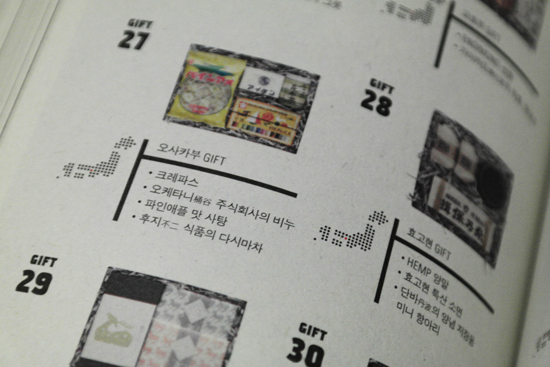
This book is a collection of diary entries Nagaoka wrote while running his project to spread the design goods store D&Department across all 47 prefectures of Japan.
Through the project, you can trace his effort to expand a design scene concentrated in Tokyo out across the whole country,
and to find ways of carrying forward and reinventing the distinctively-shaped crafts and local specialties Japan has passed down.
It's an attempt to dress Japan's own identity, through a designer's eye, in clothes suited to the times,
and maybe because it's written as a diary, reading it feels a bit like peeking into his journal,
which is part of the fun.
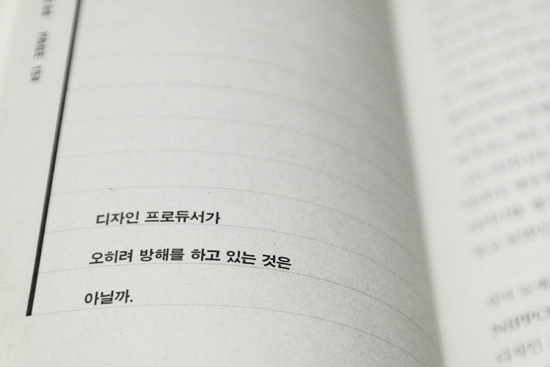
His writing is as gentle as the warm impression he gives throughout the book. But the insight tucked inside
becomes advice, becomes a question, becomes inspiration for the reader. Take a line like this: "As a designer,
you find yourself, without noticing, trying to find design within the frame called design." For some designers
that line lands as advice from a senior. And "Evaluation and systems don't really matter.
It's fine to fall short. You just fix things one by one. What matters most is thinking seriously with a pure heart
and keeping at it," feels like a question aimed straight at you: what about you?
And the line "I believe most things move forward through the act of letting go" could be a spark of inspiration for anyone
stuck on a problem.
Near the end of the book, there's a striking passage from Kim Kyung-kyun, director of the Asia Creative Academy.
"Being decent with your tools, being confident about pulling all-nighters, being able to quote a cheap price, being able to instantly
revise color, typeface, even the concept itself, whatever the client asks for: none of that can ever be a real international
competitive edge." Thinking about that alongside Nagaoka's project, it strikes me that what we really need to be able to handle
is our own identity, and what we should feel confident about should be our own vision.
I find myself thinking that might be closer to the truth.
Walking Together as a Designer