A few days ago I heard the story of a designer named Kim Yoon-jae, who recently joined Apple. He'd always enjoyed making minimalist icon designs, and not long ago he uploaded some of his work to Behance, the online portfolio site, curious to see what kind of feedback he'd get. As it happened, former Rhode Island School of Design president John Maeda saw his work and retweeted it. Soon after, he heard from both Apple and Airbnb, and by last September he was working as an icon designer at Apple's headquarters.
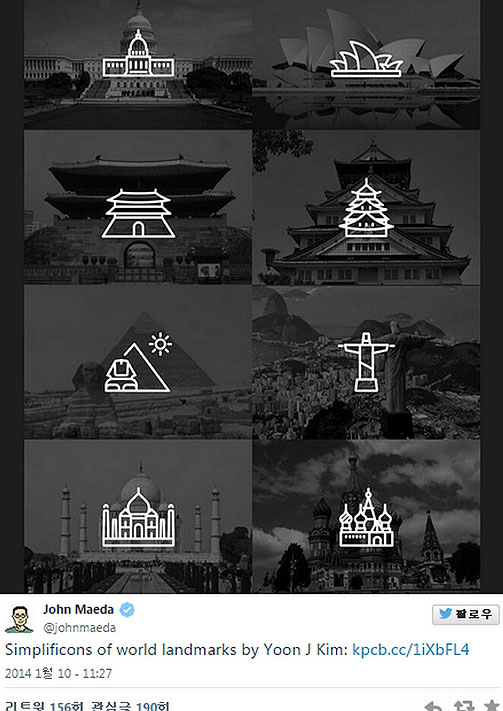
It's a genuinely astonishing story. There's hardly anyone, designer or not, who wouldn't dream of a scouting story that plays out like a movie. Reading the coverage, I saw plenty of comments suggesting that Apple picking Kim was mostly down to his design ability or other personal qualities. I can't deny that entirely, but what came to my mind first was the internet and social networks.
In truth, Kim's story isn't especially new. Countless similar things have already happened, and are happening again right now, in this very moment. What matters is that we're already "connected" to the entire world, and that connection opens up new opportunities and possibilities for us. It's this connectedness that makes platforms like Behance, Notefolio, and social media possible in the first place, and it's what has let designers and artists pursue new kinds of work built around "connection" and "participation."
Ideas like this, and the work built around them, aren't something that just appeared out of nowhere. They've already been attempted and experimented with countless times by people trying to push past the limits of design or realize some new possibility within it. That's exactly why Helen Armstrong and Zvezdana Stoimenova's book Participate: Designing with User-Generated Content is worth digging into.
"To complete a work made with participatory design, user participation is required. Rather than delivering a finished piece to a passive audience, participatory designers build open production systems. Users don't just consume content passively; they approach it with the expectation of completing a space left open for them, and actively feed content into it." - Helen Armstrong
The book is put together in an engaging way that makes the concept of participatory design easy to approach. Beyond clear explanations that help you understand the idea, it includes interviews with designers who work with the concept of "participation," a range of related projects, and short reference material so motivated readers can actually try participatory design for themselves. It also introduces participatory design projects through four broad lenses: community, modularity, flexibility, and technology.
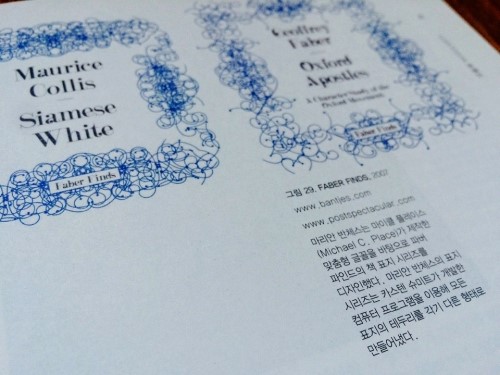
It's all tied together by the theme of "participation," but the range the book covers is genuinely wide, spanning print, digital, fashion, and spatial design. Because of that, some might think, "This feels kind of removed from me. I'm a character designer! What does any of this have to do with me?" Borrowing a line from the book, here's an answer to that.
"A designer has to be someone who conceives of something and brings it into being, and to do that, they need to know how to mix and match tools and methods from a wide range of categories."
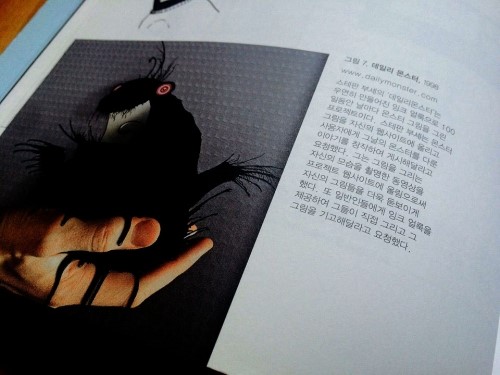
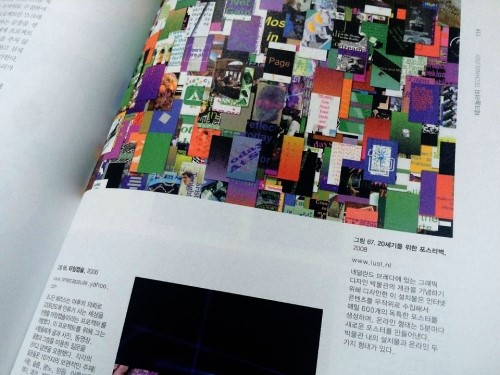
To be clear, this isn't a call to throw out the skills and workflows you've built up as a designer in your own field and replace them with something new. Rather, with almost all the infrastructure already in place (think the internet, social media), it's worth considering how the new concept of participatory design might apply to whatever your work is trying to express or achieve. Designer Stefan Bucher's story is a good example. Through his participatory Daily Monster project, he ended up building an audience, which in turn let him publish the book he'd originally been aiming for, built around his own work, Inkblot Monsters.
There's another reason we should pay attention to participatory design. Nowadays, everyone from the kid next door to the grandfather upstairs can design something using Photoshop or Illustrator. There will obviously still be a difference in quality, but we've arrived at an era where individuals can handle at home what used to be a designer's job. That's unsettling for the future of the profession, but it also means that professional designers can now attempt new things through participants who are themselves capable of creating.
"Alongside the democratization of design, the fundamental role of the graphic designer is shifting toward mentor, teacher, and leader."
This reminds me of something I heard at an advertising event last year: that the boundaries between designers, developers, planners, and marketers are steadily dissolving. We already live in an era that demands constant self-development, and on top of that, it seems we now need a new perspective and attitude that breaks the mold, grounded in an understanding of today's technology and environment. In that context, I have to wonder if looking into participatory design and understanding it will someday stop being optional and become essential.
Participate