Let's try reading the following passage in under 30 seconds.
Aoccdrnig to a rscheearch at Cmabrigde Uinervtisy, it deosn't mttaer in waht oredr the ltteers in a wrod are, the
olny iprmoetnt tihng is taht the frist and lsat ltteer be in the rghit pclae. The rset can be a toatl mses and you
can sitll raed it wouthit porbelm. Tihs is bcuseae the huamn mnid deos not raed ervey lteter by istlef, but the
wrod as a wlohe.
You've probably come across that passage before at some point. It's an old piece of text that used to circulate on message boards, and when I first read it without thinking, I understood it completely naturally. But then I realized, just like the passage itself explains, that the letters had all been scrambled around. I remember feeling a bit silly for not noticing anything odd about it, while also finding it genuinely fascinating. If you're reading it for the first time here, you probably only just realized something was off after reading this explanation.
I don't know whether it's actually true that this happens because we recognize a word as a whole rather than letter by letter, but the story does suggest that human perception has some degree of blindness when it comes to spotting flaws or errors in what we take in, even if that blindness is itself the result of evolution optimizing for efficient cognition.
So how should we, who may not be great at noticing these hidden problems, go about solving them? First, we need to be made aware that something is a problem at all. What's needed is a trigger that sparks that awareness, just like the explanation above that told you the passage was scrambled.
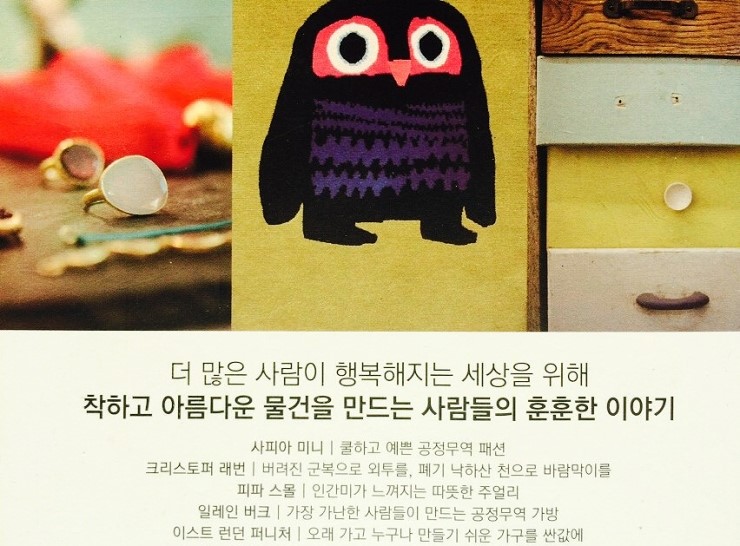
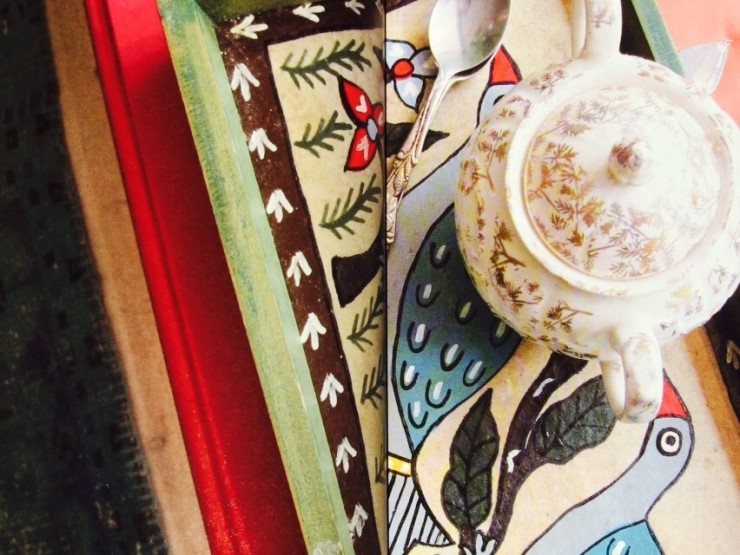
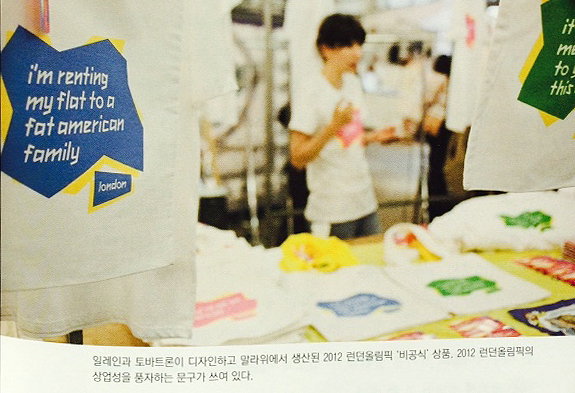
In that sense, the thirteen designers and makers who appear in Park Rooney's book London's Good Shops pull a kind of trigger on our thinking, thinking that lives inside the fixed assumptions capitalism has built into us. London's Good Shops is made up of interviews with Londoners pursuing a sustainable life through values like fair trade, recycling, small-scale, community-centered industry, and the sharing economy.
Despite my rather serious introduction, the book is actually written in a very easy, quick-to-read way. Reading the conversations the author drew out through genuine human connection with her interview subjects, you almost feel like you're sitting right there with them, listening in. The generous use of photos seems to help with that too. But if you let yourself get swept along by that comfort and just read the sentences thinking, "I guess this is the trend these days" or "huh, people like this exist," and leave it at that, I think you end up missing some of the more important things buried inside.

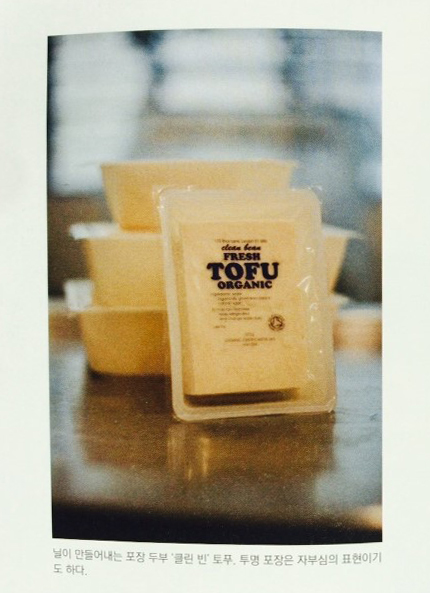
As production under capitalism went through the long process of division of labor and distribution, we've steadily become "alienated" from the things "we" actually make. The rice we eat has stopped being the fruit of a farmer's sweat and become simply a bowl of rice we pay five thousand won for. That's why jewelry designer Pippa Small's wish, that when people look at an object they'd feel the person behind it rather than just the object itself, makes you stop and think for a moment.
"What I value most in design is a human touch. When you look at an object, I want you not just to see the object, but to feel the person who made it." - Pippa Small, p.61
From Safia Minney, who runs a fair trade fashion brand, to Rupert Blanchard, who builds desks out of discarded drawers, to the People's Supermarket, a grocery store owned and run by its own customers, what makes the various Londoners in the book worth reading about is that while living inside capitalism, they recognize its problems, wrestle with what's actually right, and, above all, put some kind of answer into practice. Even a brief look at how each of them is working toward the values they believe in, in their own particular way, offers us a real spark of inspiration.
"This is the appeal of fair trade. When something in the world is wrong, instead of looking away or closing your eyes to it, you look it straight in the face and say what needs to be said." - Elaine Burke, p.76
Fortunately, quite a few recycled-goods brands and fair trade products have started appearing here in Korea too, and various platforms built around the sharing economy are gradually finding their footing. Still, getting each member of society to think about the influence they have on the people around them, pulling that trigger of awareness, seems likely to remain an important task going forward.
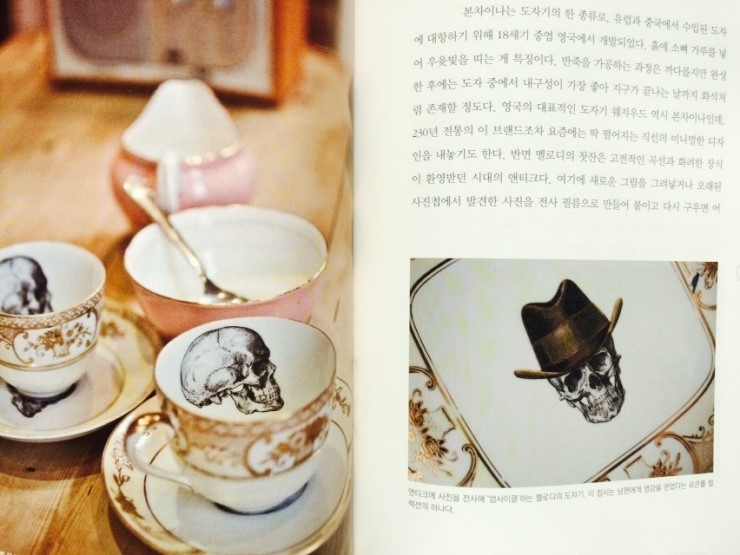
I once came across a striking line in Colin Beavan's book No Impact Man, about his year-long project living in New York with as close to zero environmental impact as possible: that the real subject of environmentalism isn't the environment, it's people, and that environmentalism is ultimately about offering people a better vision of the future. The stories in London's Good Shops aren't directly about environmentalism, but they're clearly built on the same kind of thinking and values, ones that point toward a better future.
These kinds of movements might still feel unfamiliar to us, but if Britain, with a design history well ahead of ours, is already changing, there's a good chance that same current will eventually reach us as a wave we can't avoid. Doesn't it make sense to pay attention to that change and get ready ahead of time? Reading London's Good Shops is a good place to start, and it offers plenty of ideas to build on.
London's Good Shops